
Introduction: The Influence of Expectations
“High achievement always takes place in the framework of high expectation.”
This famous quote by Charles Kettering highlights the immense power of our expectations. It applies not only to individual beliefs but also to expectations we have for others, particularly the students we teach and the children we raise. The way we perceive their abilities can directly impact their success or failure. In education, our expectations play a pivotal role in determining student outcomes, often influencing them in profound ways.
Teacher Expectations and Student Outcomes
Research consistently demonstrates the close connection between teacher expectations and student performance. A key takeaway from this Education Week article emphasizes that “The evidence of the impact of teacher expectations on student learning is both broad and deep.” Studies show that student achievement correlates strongly with how teachers perceive their abilities. In fact, as educator John Hattie found after analyzing 613 studies on teacher expectations, “student achievement tracks closely with teacher expectations.”
The words and actions we use to express our beliefs about a student’s capabilities are often subconsciously broadcast to them. These perceptions can either elevate or limit a student’s potential. Students tend to rise or fall according to the expectations set for them. This raises the question: How do our own expectations impact the children we teach and support?
The power of our words and actions about what we think a student is capable of is broadcast to the students loud and clear, for better or for worse. Students either rise or fall to the expectations of those teaching or supporting them.
The Impact of High Expectations: Gary Jensen’s Story
The power of high expectations is evident in the story of Gary Jensen, who turned around a struggling high school in Michigan. When Jensen was appointed principal of Lakeview High School in 2011, the school was in the lowest 5% of Michigan’s high schools. Yet, within just three years, it became one of the state’s highest-rated schools.
How did this transformation occur? Jensen, his team, and the faculty set high expectations for every student. He ensured that all his teachers, including the math teachers, were trained in EBLI to improve every student’s literacy proficiency across all content areas. In his school, academic achievement became perceived as a championship pursuit, dedicating as much focus to academics as to athletic success. Trophy cases were converted to display students’ academic accomplishments, and pep rallies were held to celebrate academic improvement. This culture of high expectations and celebration fostered an environment that assisted every student in reaching higher academic levels. By 2013, the school’s average ACT score had increased dramatically—from 17.5 to 19.7—proving that high expectations can lead to extraordinary outcomes.
The bar was high; the students were guided and supported to reach it.
Angie Hanlin’s Leadership: Raising the Bar in Missouri
Angie Hanlin’s story of turning around a failing school in Missouri provides further evidence of the power of high expectations. When she became principal, the third-grade proficiency rate on the state test for students in her school was just 13%. At the start of the school year, she asked her teachers to write down their expectations for student proficiency. Their predictions were 50% or lower but Angie boldly set her own goal and expectation for student proficiency at 95%.
Three years later in 2019, the third-grade proficiency rate had soared to 95%, with nearly 70% of students scoring at advanced proficiency. In 2020, despite the challenges of the COVID pandemic, the third-grade proficiency rate reached 100%. Hanlin’s approach—setting high goals, fostering a belief in the students’ potential, and providing a system and the necessary support to educators—led to remarkable success.
Expectations impact outcomes!
Angie now coaches other districts on how to replicate her success and has co-authored a book that is a blueprint: It’s Possible!: A Leadership Plan for Implementing Quality Reading Instruction and Ensuring Literacy for All.
She and 4 other educators and administrators around the country shared their recipe for success in EBLI’s Roadmap to 95-100% Reading Proficiency webinar. Included with this webinar is a list of the resources these educators and administrators utilized to move the needle for their students, school, district, or state.
Tyler’s Journey: Shattering Low Expectations
Tyler was a student that everyone had given up on except his mom. He remained in school as a 25-year-old but was not learning and was locked out of the school often to deal with his angry outbursts. Tyler had been incarcerated, had surgery to remove part of the frontal lobe of his brain, was on 42 medications, and was told he was incapable of learning much less learning to read. When his mom approached the school about them paying for EBLI instruction for him, they made an agreement that they would pay for his sessions until he was 26 if she would take him out of their school.
When he began EBLI sessions, Tyler was withdrawn, furious, defiant, and only able to read the word ‘is’. He required over 100 hours of instruction, which is much longer than typical at our center; we have had only 2 students over the years who needed more than 100 hours of instruction.
Tyler graduated from probation (with Shannon and Cricket, his 2 EBLI interventionists in attendance at the court graduation ceremony), got his driver’s license and GED, was taken off all but 2 of his medications, started his own business, and now is a delightful, cheerful, successful adult.
Overcoming Limiting Thinking: Kristine Barnett’s Story
Kristine Barnett’s experience with her autistic son, which is shared in her book The Spark, further illustrates the power of defying low expectations. When her son Jack was three, he was non-verbal and mostly unresponsive. He was captivated by alphabet cards and had them with him constantly, even when he slept. His Special Education preschool teacher recommended that his parents take away these cards, believing he would never be able to read. Instead, Barnett pulled him from the program and started her own preschool with the goal of helping Jack and other autistic children attend regular education kindergarten. By the time Jack entered kindergarten, he was verbal and thriving academically.
Barnett’s story reinforces the message that children are capable of far more than we often give them credit for. If we set the bar high and believe in their potential, they will rise to meet it.
As a mother, when told her son wasn’t expected to ever learn to read, Barnett asked herself the following question: “Why is it all about what these kids can’t do? Why isn’t anyone looking more closely at what they can do?” She took action to help her son and others reach their highest potential, in spite of their diagnoses and the limiting beliefs that typically surround them.
The Impact of Labels on Learning
Our beliefs about students’ abilities are often influenced by labels. Terms like “learning disabled,” “dyslexic,” or “autistic” can unconsciously create limitations in our minds. These labels tend to focus on what students cannot do, rather than what they are actually capable of achieving. As Jim Kwik, author of Limitless, explains, the labels placed on us can become self-fulfilling prophecies. Kwik recounts how, as a child, he was labeled “the boy with the broken brain” and internalized the belief that he would never succeed. It wasn’t until someone raised the bar for him as a young adult – and helped him reach it – that he began to believe in his own potential.
The challenge is to unlearn the limitations we’ve internalized about students or children. As Kwik writes, “Just as you’ve learned limits from your family, culture, and life experiences, you can unlearn them.” This mindset shift is essential in helping students overcome obstacles and realize their true potential.
What we think and say to and about ourselves and others matters.
Emphasizing Growth, Not Labels
Rather than focusing on what students cannot do, it is crucial to shift the focus toward their potential, growth, and progress. I avoid using labels like “learning disabled” in favor of terms that emphasize what a student is experiencing, such as “subliterate.” This perspective reframes the issue, focusing on the student’s current challenges and the potential for improvement, rather than a static label that many perceive means they are incapable of change.
This mindset is particularly important for students in special education, who are often subject to low expectations due to their labels. As a state-level special education director once told me, “The goal of Special Education is not to teach the child, it is to modify the environment to deal with their disability.” This approach, while well-intentioned, can limit the potential of students if it reinforces the idea that they cannot improve beyond their diagnosis.
Raising the Bar for All Learners
The stories of Gary Jensen, Angie Hanlin, Tyler, and others demonstrate that high expectations—combined with the necessary support and a growth mindset—can lead to extraordinary success. What each educator or parent believes about a students’ potential matters deeply, not only for their academic achievement but also for their mental and emotional well-being. When we set the bar high and support students in reaching it, anything is possible.
If a learner has a weakness or something that they can’t do (yet!), then it is up to those of us who teach them to ask ourselves what WE need to do differently to guide them in turning that weakness into a strength. If we don’t believe they can do something because they are not able to do it currently, then we won’t take the time or effort to try to teach them. This is what Jim Kwik experienced throughout his childhood. And everyone was right about him at that time – they thought he couldn’t and his experience mirrored that. When someone thought he could and helped him believe the same, his became an exceptional learner and highly successful adult.
In my unconventional journey to learning about how to teach reading, thanks to my own child’s challenges, I was most significantly influenced by Diane McGuinness. I was a ‘clean slate’: I’d had no previous instruction in teaching literacy to confuse my thinking. McGuinness’s teachings were no-nonsense with unapologetic high expectations. A research project she was involved in was with students who had many grade level gains after 12 hours of instruction. She proposed that, with few exceptions, students should be taught to read quickly or remediated in less than 40 hours of instruction. As a result of that, my expectations were the same. Most of the thousands of students I’ve taught to read (many who were predicted by others to never be able to learn to read) have been remediated and able to accurately read and comprehend in 40 hours or less of instruction. That was my expectation so, besides a small percentage of students who took longer, that is what happened.
For more in-depth exploration about the power of expectations and how to raise them, register for the free companion EBLI webinar The Sky’s the Limit. You’ll get a deeper dive into the facets of expectations and how to raise them as well as learn more from Gary Jensen and Angie Hanlin. They’ll share more about their success stories, including how they accomplished what they did, and be part of a Q & A at the end.
Together, we can raise the bar for all learners and help them reach it.
Anything and everything is possible!

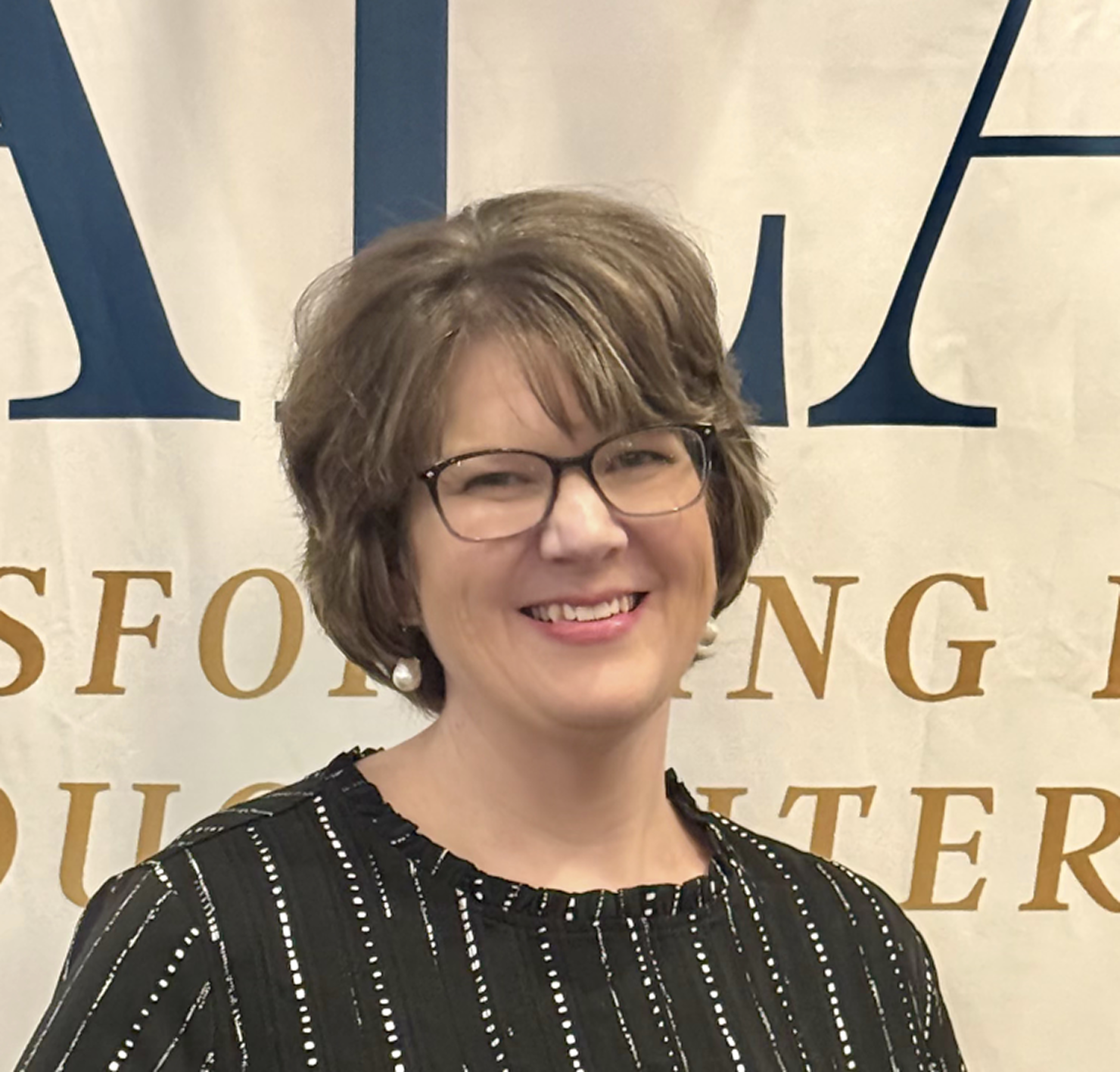
Nora Chahbazi, B.S.
Founder, EBLI Evidence-Based Literacy Instruction
Nora has dedicated over 25 years to improving reading instruction. She founded EBLI: Evidence-Based Literacy Instruction and has trained thousands of educators worldwide, teaching learners of all ages and abilities.
She has spoken at numerous conferences, including Plain Talk for Literacy and The Reading League. Nora collaborates with schools as well as organizations focused on implementing research-based teaching practices to promote high-level literacy for all.
Nora served as the literacy consultant for the documentary The Truth About Reading and participated in discussions after screenings, including at the SXSW film festival. She is on the board of The Reading League Michigan.
Nora has appeared in various media, including Emily Hanford’s Sold a Story podcast, the PBS documentary Building the Reading Brain, and an interview on Oprah Radio with Maya Angelou.
She is committed to the mission of teaching the world to read.